Wednesday, May 14, 2014

Sun Pharma settles Novartis lawsuit over cancer drug

Sun Pharma says it is allowed to launch a generic version of Novartis' Gleevec in the US in 2016, under a settlement agreement between the two companies. (Reuters) 
Sun Pharma says it is allowed to launch a generic version of Novartis' Gleevec in the US in 2016, under a settlement agreement between the two companies. (Reuters)
SummarySun Pharma's subsidiary holds a tentative approval from FDA for a generic version of Gleevec.
Sun Pharmaceutical Industries Ltd has inked a settlement pact with Novartis Pharmaceutical Corporation over cancer drug Gleevec, paving the way for the Indian drug major to launch a generic version of the medicine in the US market in 2016.
One of the subsidiaries of Sun Pharma has executed a settlement agreement with Novartis, stipulating a dismissal of the lawsuits filed in the United States against the company regarding submission of an Abbreviated New Drug Application (ANDA) for a generic version of Gleevec, the Indian drug major said in a statement.
"Under the terms of the settlement agreement, Sun Pharma's subsidiary may launch its version of generic Gleevec in the United States on February 1, 2016," it added.
The other terms of the agreement are confidential, the Mumbai-based firm said, adding that the agreement is subject to customary regulatory approvals.
Sun Pharma's subsidiary holds a tentative approval from the US Food and Drug Administration for its ANDA for a generic version of Gleevec.
As per IMS sales data, Gleevec had annual sales of around USD 2 billion in the US.
Gleevec, which is the registered trademark of Novartis, is indicated for the treatment of chronic myeloid leukemia.
Sun Pharma shares were trading at Rs 622.75 apiece in morning trade on the BSE, up 1.87 per cent from its previous close

SARVESH SINGH
PGDM 2ND SEM

Asian shares step back from highs, bonds supported

Asian shares step back from highs, bonds supported

Asian shares step back from highs, bonds supported

Tokyo: Asian shares stepped back from a one-month high on Thursday, tracking a retreat on Wall Street, while expectations of credit easing by the European Central Bank knocked down yields on US and European bonds.
 
MSCI’s broadest index of Asia-Pacific shares outside Japan dipped 0.1% from one-month high hit on Wednesday as Wall Street shares retreated overnight from record highs hit the day before.
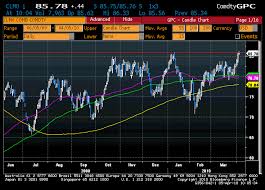
“Despite the modest decline in US equities on Thursday, the mood in equity markets globally remains buoyant, with major indices flirting with all-time highs and emerging equity markets rallying strongly,” Barclays analysts said in a research note.
 
While shares prices saw limited moves, there was more pronounced price action in the world’s largest bond markets, as expectations of monetary easing by the ECB drove prices up and yields down.
 
The central bank is preparing a package of policy options for its June meeting, including cuts in all its interest rates, and targeted measures aimed at boosting lending to small and mid-sized firms
 
The 10-year US Treasuries yields fell to six-month low of 2.5%, breaking out of a long-held range, and last stood at 2.5%.
 
The yield on 10-year German Bunds fell to a one-year low of 1.3% while Italian 10-year debt yielded a record low of 2.9%.
 
British government bond yields dropped to six-moth low of 2.5% when the Bank of England offered a surprisingly dovish monetary policy outlook, even though the BoE was seen as likely to be one of the earliest major central banks to raise interest rates sooner rather than later.
 
The BoE pushed back against expectations it might raise interest rates in less than a year’s time, leaving largely unchanged its assumptions on the timing of interest rate rises even as it acknowledged a strong recovery in the labour market.
 
“Their comments are extremely similar to what the Fed has said. Yes, the jobless rate is falling faster but wages are not rising much,” said Tohru Yamamoto, chief fixed-income strategist at Daiwa Securities.
 
Small wage rises mean low inflationary pressure, allowing central banks to maintain extremely easy monetary policy. “So you can say that markets are now starting to expect a new normal, where wages do not rise much (in developed countries). If even the BoE won’t raise rates, the Fed probably won’t either,” Yamamoto added.
 
In the currency market, sterling, which had been rallying so far this year on BoE expectations, fell to one-month low of $1.6753 and last stood at $1.6766.
 
The euro, on the other hand, stood not far from Tuesday’s one-month low of $1.36885, having fallen two percent from 2 1/2-year high just under $1.40 after ECB chief Mario Draghi last week indicated his readiness to ease policy next month.
 
The Japanese yen gained 0.2% in early trade to ¥101.69 to the dollar, after data showed Japan’s January-March GDP grew an annualised 5.9%, beating market expectations of a 4.2% expansion.
The yen’s gains hurt Japanese shares, pushing down the Nikkei share average 1.4%.
 
But the impact of the data is likely to be short-lived, given that growth was boosted by last-minute buying ahead of sales tax hike in April and looks set to slow.
 
Later in the day, the euro zone will publish its first quarter GDP data while in the United States, CPI and industrial output figures are due. Reuters
 
RANJAY KUMAR
PGDM 2nd SEM
SOURCE- MINT 


After exodus, Narayana Murthy's Infosys plans to retain high performers

The large number of exits of Infosy employees had raised serious concerns on the IT major's ability to retain talent.  
 
The large number of exits of Infosy employees had raised serious concerns on the IT major's ability to retain talent.
SummaryNarayana Murthy's Infosys reported many top-end exits and clocked attrition rate of 18.7 pct.
Faced with a high level of attrition, India’s second-largest IT services exporter Infosys, is going all out to strengthen its human resources (HR) initiatives to reverse the trend of people leaving the organisation and build a culture of high performance.
Infosys, which had a total employee strength of 160,405 at the end of FY14 reported an attrition of 18.7%, which was a rise of 2.4% when compared to the previous fiscal. The large number of exits from the company had raised serious concerns on its ability to retain talent.
Talking to FE, Srikantan Moorthy, senior vice-president and group head (human resources), Infosys, said, “We have to continuously reduce the number of people that leave us especially the high performers. We have to bring down the exit of high performers as low as it can be and then the overall exits will also come down.”
According to the Infosys HR head, they would very clearly focus on the high performers and try to retain them either through higher compensation or putting their career on fast track. Infosys has already introduced the quarterly promotion scheme. Besides, the high performers will get increments much above the company’s average pay hike.
The other differentiation which is being brought about Infosys is to give greater prominence to the tech savvy professionals. The general norm within the IT services industry for any professional to rise up the ranks is to demonstrate the ability to manage people or team, with larger being better.
“We have started the tech expert track for people who have a deep competence in a specific area and are able to grow up the ranks without having to manage people,” Moorthy said. Employees under this programme would be given the labels of such as Infosys Fellow or Distinguish architect or engineer. “We need to show them the path so that these people do not fizzle out,” the Infosys HR head remarked.
In the last one year, the $8.2 billion IT services company has witnessed numerous exits which was not just at the senior management level but also at mid and junior levels. Many employees of Infosys at the mid level have in fact joined their competitors such as TCS and Wipro.
Realising that the situation was getting out the control, Infosys has intensified its HR efforts which looked at the three main components for employee retention: economic, education and emotional. The company announced


vijay kr yadav
pgdm sem-2nd
sou- times of india

Ambani, Adani gained most from stocks 


MODI EFFECT Banking stocks also rose smartly on expectations of a BJP election victory and economic revival

RELIANCE SHARES HAVE RISEN 9.2% SINCE FRIDAY, AND THE SHARES OF THE THREE LISTED ADANI GROUP COMPANIES EVEN MORE
From page 1 MUMBAI: Reliance Industries chairman and managing director Mukesh Ambani and Adani Group promoter Gautam Adani are the two biggest beneficiaries of the rally in the stock markets since Friday.


However, if the ` 1,062-crore value of the 3.73% shareholding of Petroleum Trust, that forms part of the promoter group but doesn’t belong to the Ambani family, is taken into account, the rise in the promoter group’s net worth is lower at ` 11,836 crore.
Raj gaurav
PGDM,1st Year
Source:-hindustan times

Sebi planning to relax some norms to revive primary market

Sebi planning to relax some norms to revive primary market

Sebi planning to relax some norms to revive primary market 

Mumbai: The country’s capital market regulator plans to relax requirements on just how much of their stake promoters will have to dilute in an initial public offering (IPO) in a move aimed at reviving the primary markets.
 
The Securities and Exchange Board of India (Sebi) is considering a multiple slab system, under which the minimum amount of equity to be offloaded would be linked to the post-issue capital of the company, according to three persons, including a Sebi official, familiar with the matter. 
 
 
At present, all companies with a post-issue capital below Rs.4,000 crore are compulsorily required to offer at least 25% stake in the IPO, while companies with above Rs.4000 crore post-issue capital are required to offer at least 10%. 
 
 
“A number of IPO-ready firms, especially those with market capitalisation (post issue capital) less than Rs.4,000 crore, have stayed away from a listing over fears that they may not be able to offload 25% stake in one shot,” said one of the three people who asked not to be identified. 
 
While the new slabs are still to be decided, smaller companies may be allowed to sell less than the 25% stake that is currently mandatory, added this person. However, the required minimum offer size would remain 10% of the company’s share capital. 


“The present norm is somewhat restrictive. A company with a (post issue) capital of Rs.3,990 crore requires to float at least 25%, while a company with just Rs.10 crore more capital requires to dilute only 10%. The required offer size should be on a proportionate basis according to the size of the post issue capital,” said Prithvi Haldea, chairman and managing director, Prime Database, a primary market tracking firm.
 
On 16 April, Sebi chairman U.K. Sinha asked investment bankers to come up with suggestions to revive the primary markets after gathering views of exchanges, brokers and corporations. Weak sentiment in the secondary markets, tepid retail investor interest and stretched financials of corporations together caused a steep fall in the funds raised via the IPO market. 
 
 
In fiscal year 2013-14, Rs.1,204 crore was raised via 38 IPOs, compared with Rs.6,497 crore raised via 33 issues in the previous year.
 
“Sebi is concerned about the state of primary markets. The regulator is examining ways to encourage primary market issuances, reduce the timeline for IPOs and make the process more cost effective. 
 
Apart from introduction of a slab-based regime for IPOs, there could be some operative changes such as making IPOs mandatorily online, doing away with physical IPO application forms altogether,” the first person said. 
 
Sebi is also considering making mandatory the Application Supported by Blocked Amount, or ASBA mechanism, where applicants do not make any payments at the time of applying, the amount is “blocked” in their accounts, and deducted only after shares have been allotted.
 
This would be a pre-requisite for moving away from physical IPO applications to a purely online system, and will also cut down the overall time-frame for an IPO. “ASBA needs to be made available beyond the top cities and all brokers connected to the stock exchange mechanism should be told to offer it mandatorily. All bank branches should also be equipped with ASBA,” said an investment banker who did not wish to be named.
 
Another proposal made by investment bankers to Sebi is to increase the portion reserved for qualified institutional buyers (QIBs) in IPOs, to 60% from the current 50% of the issue size. Further, it has been suggested to increase the anchor investor quota to 60% of the QIB basket from the current 30%. QIBs include banks, financial institutions, state finance corporations, venture funds and just about any other entity considered sophisticated enough to understand and operate in markets. 
 
“The idea is to provide a larger room to institutional investors in the price discovery mechanism,” said a third person. 
 
 
Bankers also want Sebi to make insurance companies eligible to bid for the 5% quota reserved for mutual funds, and allow retail investors to be allotted shares at a discount of 10% to the issue price, the third person added. He too did not wish to be identified. 
 
 
A formal list of these suggestions is likely to be submitted by bankers to Sebi in the coming weeks, following which the regulator will put out a discussion paper by July. “Sebi as a regulator cannot create investor demand for IPOs. Primary market tends to follow secondary market, which in turn follows the state of economy. However, by changing norms, Sebi can indeed facilitate a smoother IPO process to encourage firms to get listed,” Haldea added.

Rahul kumar Gupta

PGDM,1st Year

Source:Mint

Now, a dollar SIP for Indian investors


PineBridge mutual fund has launched Dollar Systematic Investment Plan (SIP). Under this facility an investors will invest a fixed amount of US Dollar through SIP into PineNow, a dollar SIP for Indian investorsBridge India US Equity Standard fund.
"Suppose you want to accumulate $10,000 for the higher education of your child in the US five years down the line, then dollar SIP will help you plan your investments in terms of dollar as it is difficult for an investor to calculate how much to save in terms of rupees every month to achieve the targeted amount in dollars due to the currency fluctuation" says Siddhartha Singh, CEO, PineBridge mutual fund.
So, how is it different from a normal SIP?
Unlike a normal SIP in which an investor invests a fixed sum in terms of Indian rupees on a fixed date every month, here the investors will be contributing in terms of fixed amount of dollar. The dollar SIP will be converted into rupee and then the rupee amount will be debited from the investor's bank account. Let us explain with an example how it will work.
Suppose, an investor decides to do an SIP of $1 and the exchange rate is Rs 50 to a dollar in the first month, then his SIP amount in terms of INR will be Rs 50. Suppose, in the next month, if rupee depreciates and $1 is equivalent to Rs 55 then he will have to increase the SIP to Rs 55. So, monthly SIP in terms of INR will depend on the exchange rate and will keep on increasing or decreasing accordingly, but will remain constant in dollar terms.
For conversion of dollar into rupee, the RBI reference rate prevailing on the 7 days prior to the transaction day shall be used. For example, if one executes the SIP on 21st of the month then the RBI reference rate of 14th of the month will be used.
The facility is available only in auto debit (ECS) mode and not through post-dated cheques. But one has to submit the application physically as it is not available online.
The investor can mention the maximum authorised debit (MAD) amount per SIP installment in the application form to keep a tab on the amount that can be debited from investor's account. Till the time SIP amount converted from dollar to rupees exceeds the MAD, the SIP amount will not processed and will start automatically as and when the installment amount falls below MAD.
The installment dates available for dollar SIP are 1st/7TH/14TH/21st of the month or quarter. Investor can opt for all the four dates.
The minimum installment amount under dollar SIP is $100 and in multiple sof $1 thereafter. There is no upper limit. The minimum tenure is 12 months.
Returns from a dollar SIP will be the same as a normal SIP.

ANAND MAURYA
PGDM-2SEM

Monday, May 12, 2014

Asian stocks steer through Ukraine woes, dollar up

 Asian stocks steer through Ukraine woes, dollar up

Tokyo: Asian shares shrugged off tensions in the Ukraine and followed Wall Street higher on Tuesday, while the dollar held its recent gains against the yen and euro thanks to stronger US Treasury yields.
Indian shares were expected to rally strongly when markets open later in the day, boosted by exit polls predicting India’s business-friendly opposition party winning in the world’s biggest ever elections.
Indian-based assets in global markets surged on Monday after the exit polls, including the 1-month rupee NDF and US-listed shares of Indian banks such as ICICI Bank Ltd.
MSCI’s broadest index of Asia-Pacific shares outside Japan advanced 0.4% and Tokyo’s Nikkei gained 1.9%.
The Dow and S&P 500 hit record closing highs on Monday, as strong corporate results and an improving economic outlook spurred a broad rally on Wall Street.
Equity markets have so far brushed off a weekend referendum in Ukraine, where pro-Moscow rebel organizers said nearly 90% had voted in favour of self-rule, possibly inflaming the conflict.
“Investors are so far taking (Russian President Vladimir Putin) at his word that eastern Ukraine will not be repeat performance of Crimea and don’t seem too concerned about the next round of US-EU sanctions given the weakness of those offered to date,” Jasper Lawler, market analyst at CMC Markets, wrote in a note to clients.
“With Donetsk now officially asking to join Russia, Putin’s diplomacy will be fully put to the test,” Lawler added.
The markets are also likely to be focused on industrial production and retail sales data from China expected later on Tuesday. Weak readings could depress risk-sentiment, though they may also fuel expectations for further stimulus measures from Beijing.
China’s economy is growing at its slowest pace in decades, with recent data suggesting a challenging outlook over the next year.
The dollar brushed a one-week high of ¥102.22, helped by higher US Treasury yields on investor caution ahead of a slew of data this week that could paint a brighter economic picture.
The euro remained on the defensive at $1.3755, stuck close to a one-month low of $1.3745 hit on Friday after European Central Bank president Mario Draghi fired a verbal warning against the common currency’s recent gains.
The benchmark 10-year US Treasury note yielded 2.6% after hitting 2.67% on Monday, its highest since 2 May.
The oil market remained a little more sensitive to tensions in the Ukraine, with US crude trading little changed at $100.55 a barrel after gaining 60 cents on Monday. Reuters


LOVE GUPTA
PGDM 1ST YEAR